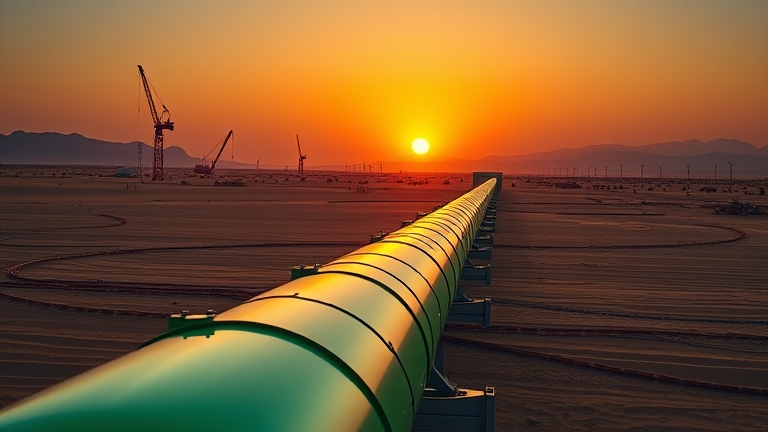
At a high‑profile summit in Beijing on June 7, Chinese Premier Li Qiang unveiled a $250 billion “Green Belt and Road” initiative that will build the world’s first trans‑continental green hydrogen corridor, stretching from the Pacific coast of China through South‑East Asia, across Africa, to European ports.
The plan calls for 12,000 km of dedicated hydrogen pipelines, 20 GW of offshore electrolyzers, and 15 new export terminals. By 2035, the network aims to deliver up to 150 million tonnes of green hydrogen annually – enough to power roughly 80 million fuel‑cell vehicles, according to a study by the International Energy Agency.
"This is not just an energy project; it’s a strategic realignment of the global energy map," said Dr. Elena García, senior analyst at the European Institute for Sustainable Futures. "The United States and the EU are already calibrating their own hydrogen strategies, but China’s scale and financing capabilities could set the benchmark."
Environmental groups welcome the move, noting that the corridor could shave up to 1.2 gigatonnes of CO₂ emissions by 2035, helping meet the Paris Agreement’s 1.5 °C target. The International Renewable Energy Agency estimates that each megawatt of green hydrogen capacity can offset roughly 1,600 tonnes of CO₂ per year.
However, the project faces hurdles. African Energy Minister Kwame Nkrumah warned, "We must ensure local communities benefit from jobs and technology transfer, not just foreign profits." Financing remains a concern, with the Asian Development Bank pledging $30 billion, but the rest will rely on sovereign wealth funds and private investors.
Implementation is slated to begin with pilot pipelines in the Niger Delta and the Gulf of Oman by 2027, followed by phased expansions. If successful, the corridor could inspire similar green hydrogen highways linking the Americas and the Middle East, reshaping the geopolitics of energy for decades to come.