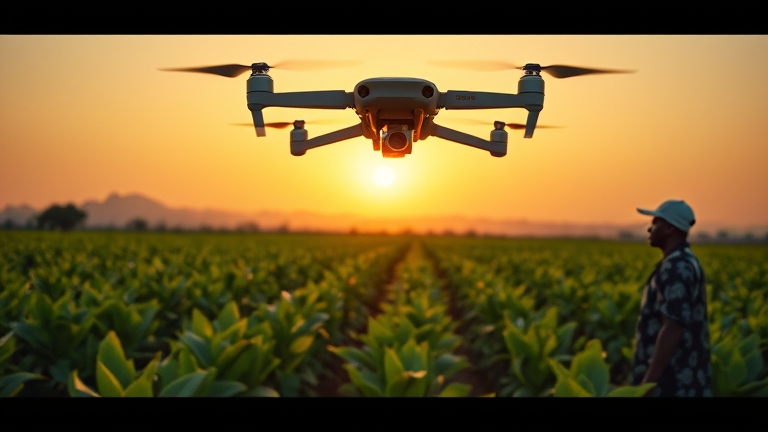
Across the savannahs of Kenya, the hum of autonomous drones is becoming as familiar as the chirp of crickets. The technology, once the domain of high‑tech farms in the West, is now landing on plots as small as half a hectare, offering precision fertiliser application, pest monitoring and weather‑adjusted planting schedules.
According to a recent FAO report, the African agricultural drone market grew to $1.4 billion in 2025—a 45 % year‑on‑year increase—driven largely by venture‑backed startups and government subsidies. The United Nations estimates that sub‑Saharan Africa needs to boost food production by 60 % by 2030 to keep pace with population growth, and drones are being touted as a fast‑track solution.
"Since we started using the SkyHarvest AI drones, our maize yield has risen by about 20 %," says 42‑year‑old farmer Amina Ng’ang’a of Nakuru County. "They tell me exactly where to spray, and the sensors warn us of pest outbreaks before they spread. It saves both time and money."
Tech entrepreneurs argue that the real breakthrough is the integration of machine‑learning models that analyze satellite imagery, soil data and local climate patterns in real time. "Our platform processes over 3 petabytes of agronomic data each month, delivering site‑specific recommendations to each drone," explains Dr. Kofi Mensah, co‑founder of AgriVision, a Nairobi‑based startup that recently secured $30 million in Series B funding.
Critics caution that the rapid rollout could widen the digital divide if smallholders cannot afford the upfront costs. To address this, Kenya’s Ministry of Agriculture launched a pilot program in 2024 that subsidises drone rentals at $15 per hectare per season, a price that the ministry says is comparable to traditional pesticide applications.
Early results from the program are promising: a joint study by the University of Nairobi and the World Bank found that farms using drone services reported a 12 % reduction in water usage and a 15 % decrease in chemical inputs, while maintaining or improving yields. "These efficiencies are crucial for climate‑resilient agriculture," notes Dr. Lina Patel, a senior analyst at the World Bank.
As the technology matures, policymakers, investors and farmers alike are watching to see whether AI‑driven drones can become a staple of Africa’s food‑security strategy or remain a niche tool for the well‑connected. For now, the sky over the continent is certainly buzzing with possibility.